
Contents
Sandy beaches, cliff-edge castles and a UNESCO World Heritage Site. The Causeway Coastal Route is home to many of Northern Ireland’s most iconic landscapes, and it is also my old stomping ground. Once upon a time (a long time ago) I actually studied in nearby Coleraine (University of Ulster) and lived for two years in the coastal town of Portstewart. But, other than nearby pub crawls, nights out at Kelly’s nightclub (Portrush) and taking my car for spins on Portstewart Strand, I never actually visited any of the Causeway Coast attractions. Soon after, I was kicked out of university and since then I’ve spent most of my time in Asia.
After years living abroad in Asia, I eventually returned home to Northern Ireland. These days I’m based in the seaside city of Bangor, and one of the first road trips was introducing Fanfan to the rugged coastline of my wee country. I admit this coastline even wows miserable me. We followed the route below, although there are of course various tour options too, such as the Giant’s Causeway Tour. Anyway, here are my 10 favourite Causeway Coast attractions and stops along the Causeway Coastal Route.


The Dark Hedges
The sinister tree arches of the Dark Hedges have been famous in Northern Ireland for generations, but it wasn’t until their appearance in Game of Thrones that they became an internationally recognised tourist attraction. Today, this stop along the Causeway Coastal Route is more of a photo opportunity than anything else and, despite being slightly off the main route, it is usually buzzing with visitors walking and driving from one end to the other.
Technically they aren’t really a Causeway Coast attraction either, as they are a good 20 minutes inland, but it also makes sense to pass them on the way in, given you’re starting out from Belfast. The Dark Hedges


Cushendall
This alternative approach to the Causeway Coastal Route passes through the coastal town of Cushendall, where the scenery becomes more mountainous with winding roads, forests and plenty of sheep. To me, it felt closer to the Mourne Mountains than the classic scenery people associate with the Causeway Coast. When we visited, it was our route back and the contrast was a pleasant surprise. Despite being one of the lesser-known stops along the Causeway Coast, it still feels relatively quiet and pleasantly off the beaten track.
Highlights included some great views over the coastline and mountain backdrop from the Cliff Walk and,


Rathlin Island
Travelling to Rathlin Island sounds like a full-day excursion, yet we managed to squeeze it into a packed itinerary along the Causeway Coast. That same day we also visited four of the attractions on this list, after starting with breakfast in Belfast. So don’t let the ferry put you off. The Rathlin Ferry from Ballycastle Ferry Terminal usually takes between 25 and 40 minutes each way, making it much easier to visit than most people expect.
The port of arrival is a small village harbour and the starting point for scenic walks around the island. If you’re short on time, there are also bike rentals and a shuttle bus to the RSPB Seabird Centre. That said, simply wandering along the harbour is an attraction in itself, passing old stone cottages while seals bask on the nearby rocks and beaches. I wrote a full guide to visiting Rathlin Island if you’d like a closer look at what to expect.
Unfortunately there is limited accommodation on the island and the better option would be to stay on the coast (Ballycastle hotels here).


Carrick-a-Rede Rope Bridge
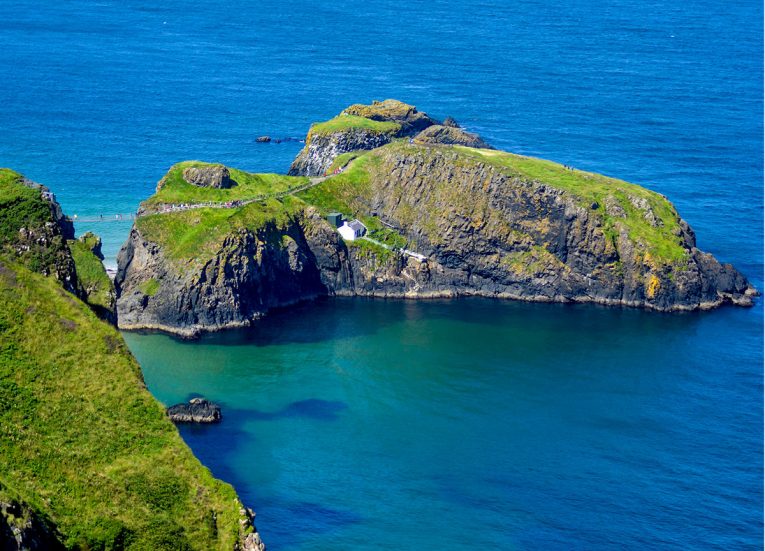
Leaving Ballycastle, the Causeway Coastal Route becomes increasingly busy with visitors, especially during summer. If possible, I’d avoid bank holidays and peak weekends. Of all the attractions on this list, the Carrick-a-Rede Rope Bridge is the only one we still haven’t crossed.
We have, however, photographed it from the clifftop above (as shown below) and even driven to the entrance on three separate occasions. Every time, though, the crowds have convinced us to move on. The coastal walk itself is worth visiting, even if you don’t cross the bridge, but bridge access normally requires a timed ticket. Since it’s managed by the National Trust, membership can be worthwhile if you’re planning to visit several of Northern Ireland’s top attractions.


Port Ballintoy
This is one of the lesser-known stops along the Causeway Coastal Route which, like many places nearby, became more widely known thanks to Game of Thrones. Ballintoy Harbour appeared as the harbour of the Iron Islands, home of Theon Greyjoy and the Ironborn. You’ll still spot plenty of Game of Thrones signs and tours along this stretch of the Causeway Coast.
Otherwise, this little harbour is simply a lovely place to spend an hour or two. Surrounded by rugged coastline and small sandy beaches, it still retains plenty of local charm despite its popularity. On our last visit we found a lively café beside the harbour, dog walkers along the shore and kids jumping into the water. There are the usual souvenir stalls and buskers, but they’re fairly low-key and don’t spoil the atmosphere. Parking around the harbour can be tight during busy periods, although it remains noticeably quieter than some of the bigger attractions along the Causeway Coastal Route. It is also one of the better places to base yourself, with hotels near Ballintoy found in the village above.


The Giant’s Causeway
I’m sure you’ve already heard of the Giant’s Causeway before reaching this article, so I won’t spend too much time introducing it. It’s also been a while since my last proper visit because, well, I’ve seen it before and these days it can feel a little over-commercialised. That said, it’s worth knowing that you don’t actually have to pay to visit the Giant’s Causeway itself. The admission fee covers the visitor centre, parking and audio guide. If you park elsewhere and walk in, you can still visit the famous basalt columns completely free. I explain exactly how to visit the Giant’s Causeway for free here. While I normally support the National Trust, I still don’t think anyone should feel obliged to pay just to see our own coastline.
Anyway, for anyone new to the Giant’s Causeway, it consists of around 40,000 interlocking basalt columns which, according to Irish legend, formed part of a causeway built by the giant Finn McCool so he could cross to Scotland and fight Benandonner. True story. The Causeway Hotel also makes for a convenient place to stay right beside the attraction.


Bushmills Distillery
If there’s one Causeway Coast attraction not to be missed, it most definitely is the Bushmills Distillery tour. Or maybe that’s just me. The tour takes you behind the scenes of the world’s oldest licensed whiskey distillery, where Bushmills Irish whiskey has been crafted for centuries. If you’ve ever wondered why there’s an “e” in the Irish spelling of whiskey, they’ll probably start the tour by telling you it stands for “excellence”. Note that photography isn’t allowed through many parts of the distillery due to the potentially flammable fumes created during the distillation and storage process. So you’ll just have to use your imagination. Think Charlie and the Chocolate Factory, only with more malt.
At the end of the tour there will be a whiskey tasting, so bring along a whiskey-hating friend to claim an extra dram and, more importantly, a designated driver. Alternatively, this is probably one of the best places to stay for the night (Bushmills hotels here). The gift shop also often stocks distillery-exclusive bottles, making it well worth a browse before you leave. Again, maybe that’s just me.


Dunluce Castle
Dunluce Castle was originally added simply to round out a solid list of 10 Causeway Coast attractions. For years it was little more than a picturesque stop along the route, but today it’s one of Northern Ireland’s best-preserved medieval castle ruins and a worthwhile attraction in its own right. While there is an admission charge to explore inside the castle, the dramatic clifftop setting alone makes it worth pulling over for a look.
On our last visit, though, the narrow road leading to the castle was packed with buses and tourists, so we never actually made it inside. There is still free access to admire the castle from the surrounding viewpoints and nearby beach, however, making it well worth a stop even if you’re just looking for one of the most iconic photos along the Causeway Coastal Route.


Drive On Beaches
There are a couple of drive-on beaches along the Causeway Coastal Route, but the best known is Portstewart Strand. Stretching for around 2km, with sweeping sand dunes on one side and the Atlantic Ocean on the other, it somehow still feels spacious even during the busiest summer days. Vehicle access is managed by the National Trust, although members can drive straight onto the beach as part of their membership.
Alternatively, there’s Downhill Beach (pictured top left), just beyond Mussenden Temple. Whatever you do, don’t wheelspin or attempt handbrake turns on the sand unless you fancy getting stuck… and probably being reported on the way out. My car exhaust never did recover. Anyway, the seaside town of Portstewart remains one of the best places to stay (Portstewart hotels here) and marks the western end of the Causeway Coast.


Mussenden Temple
Mussenden Temple is one of the most recognisable landmarks on Northern Ireland’s north coast, although it sits slightly away from the main Causeway Coastal Route beyond the mouth of the River Bann. Reaching it means turning inland at Coleraine before looping back towards the coast, but the detour is more than worthwhile.
Like Carrick-a-Rede, this is another National Trust attraction, meaning there’s an admission charge to explore the estate itself. That said, the views from Downhill Beach below are almost as spectacular and completely free. If you do decide to visit, the grounds of Mussenden Temple and Downhill Demesne include beautiful coastal walks and plenty more to explore beyond the famous temple. Nearby Castlerock also makes an excellent base for exploring this stretch of the Causeway Coast (nearby hotels here).


