
Contents
Living as a digital nomad comes with undeniable freedom, but sometimes at the cost of mental health. Physical exhaustion, changing time zones, unstable routines, etc. What was once a dream turned into a real problem.
Luckily, free-spirited people nowadays shouldn’t abandon travelling for the sake of mental health. They can carry mental health with them! Apps in this review, Breeze Mental Health, Headspace, Talkspace, etc., don’t require a fixed schedule or location. Here are 5 apps that make travelling easier and tips on how to use them.

These 5 Apps Will Make Your Travelling Mentally Easier
When you’re constantly on the move, mental health support needs to be flexible, lightweight, and easy to return to after disruptions. The best apps for digital nomads don’t rely on strict schedules or long daily sessions. Below are five apps that work exactly like that.
1. Breeze App
Available on iOS and Android: Yes
Languages Available: English, French, German, Italian, Japanese, Portuguese, Spanish, and Turkish
Free to Use: Yes
Premium Available: Yes
Cost of Premium: $29.99 per month
Reviews: Breeze Wellbeing is rated positively across platforms with an average rating of 4.8.
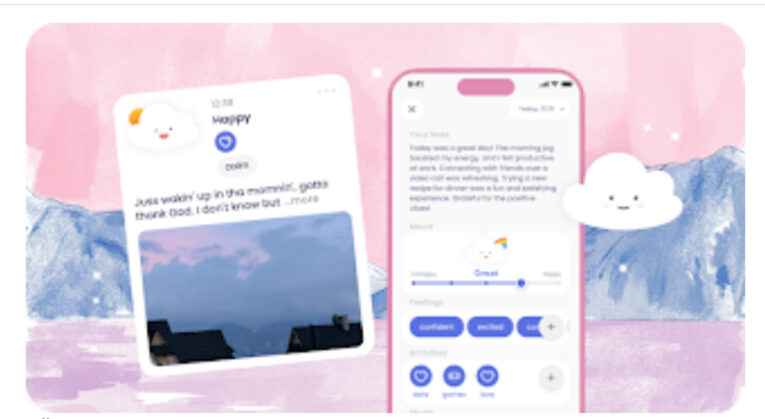
Breeze Mental Health has over 15 million downloads and reviews, highlighting user interface and soft language. If you still don’t know what is Breeze, it’s an ecosystem for mental health and self-discovery. Unlike other mental health apps that focus on a few features, Breeze has more than ten of them in one app:
- Quizzes: Nearly 30 tests, including entertaining ones (Humor style, Love language, Masculine and feminine energy, etc.) and more serious evaluations (Negative childhood experiences, ADHD traits, Manipulative tendencies, etc.)
- Habit builder: Choose a goal and break it down into small steps you will do every day.
- To-do list: Customizable to-do list, where you can add logos to your tasks, set repetitiveness, and timers.
- Journaling: Guided prompts and freewriting options.
- Games: Help to relax and get stimulation without getting stuck on social media.
- Mood tracker: To learn how certain events influence your mood.
- Therapist discount: 20% discount for therapy sessions for the first month.
- Daily affirmations: Whether you do or don’t believe in affirmations, it’s nice to get validation occasionally and think about yourself positively.
- Stats: With consistent use of Breeze, the analytics feature unlocks, where you can see your average mood and events that impacted it.
- Achievements: Collect badges for self-awareness.
- Social feature: Exchange self-discovery insights on social media or in private with your close circle.
- Mindfulness: Short meditations for beginners.
If you’re looking for a universal app that can help you with mental health, Breeze is currently the strongest option on the market.
At its core, Breeze focuses on self-discovery rather than crisis management. That makes it especially useful for travelers who feel “mostly okay” but notice growing stress, loneliness, or emotional fatigue over time.
2. Talkspace
Available on iOS and Android: Yes
Languages Available: English (Therapists speaking different languages)
Free to Use: No
Premium Available: Yes
Cost of Premium: $69 per week (can be covered by insurance)
Reviews: Average rating of 4.0.
Talkspace is a good option for digital nomads who want access to licensed therapists while living abroad. The app connects users with mental health professionals through text, audio, or video sessions, which can be especially helpful if you’re dealing with anxiety, depression, or major life transitions while traveling.
The biggest advantage of Talkspace over other therapy platforms is that everything is in one app: your texts, notes, therapist, and psychologist’s base. However, it’s important to have a stable internet connection. Otherwise, the quality of sessions can be damaged.
3. Thenics
Available on iOS and Android: Yes
Languages Available: English
Free to Use: Yes
Premium Available: Yes
Cost of Premium: Ranging from $3.99 to $89.99, depending on subscription type
Reviews: 4.1 (App Store and Google Play)
Thenics is not a mental health app directly, but it can have an impact on mental well-being.
Oftentimes, frequent travellers limit physical movement, and walking is their peak physical activity. It’s not necessarily bad, but physical movement is essential to emotional regulation. And Thenics teaches users calisthenics, not only physical exercise, but also essential life skills.
Designed around bodyweight training, Thenics helps users build strength using minimal equipment, making it ideal for travel. Thenics offers clear progressions and short workouts you can do in a hotel room, park, or beach.
Important: For people who are used to advanced strength training, Thenics can feel underwhelming. Try the free version first.
4. Headspace
Available on iOS and Android: Yes
Languages Available: English, French, German, Spanish, Portuguese, and Mandarin.
Free to Use: Yes
Premium Available: Yes
Cost of Premium: $12.99 per month
Reviews: 3.5
Headspace is one of the most well-known mindfulness apps, and for good reason. It offers guided meditations, breathing exercises, and sleep support. For digital nomads, whose sleep schedule isn’t one of the healthiest, a bit of mindfulness won’t hurt.
How to use Headspace for travelling? As a stabilizing daily ritual:
- Start your day with 5-10 minutes of meditation.
- Stop for a quick reflection in overwhelming moments.
- Before sleep: An evening routine can help you to sleep better and feel more rested.
You don’t need to do anything. Choose whatever feels the most resonant. Doing something for your spiritual well-being is better than doing nothing.
5.Moodfit
Available on iOS and Android: Yes
Languages Available: English
Free to Use: Yes
Premium Available: Yes
Cost of Premium: $8.99 per month
Reviews: 4.5
Moodfit is designed to help users understand how lifestyle factors affect their mental health. Your chaotic life as a digital nomad can also be tracked with data on sleep, exercise, nutrition, and habits.
What will tracking your lifestyle give you as a frequent traveler?
- Know your responses to different life situations.
- Prepare better if stress/burnout awaits ahead.
- Learning more about your triggers, what tires you, and vice versa, gives you the energy.
That said, the app is more data-driven than emotionally supportive, so it may feel less comforting during emotionally intense periods. It’s best suited for users who like structure and metrics.
Conclusion: Which App Is for Me?
Choosing the right mental health app as a digital nomad depends on what kind of support you need most right now.
If you’re looking for an all-in-one tool, the Breeze app is a strong choice. We can also recommend this app to beginners who aren’t sure what exactly they need but want to explore a bit of everything.
If professional therapy access matters most, Talkspace may be the best fit. For stress relief, Headspace works well. If you prefer data, Moodfit can give you valuable insights. And if physical movement unloads your mind, you’ll like Thenics.
There’s no single “best” app. The best choice is the one that fits your current needs. Experiment, try new things, and remember that it’s okay to feel tired or burned out. What’s not okay is to ignore your body cues