
Contents
A road trip through Northern Ireland is less about ticking off landmarks and more about how the landscape unfolds between them. The distances are short, but the shifts in scenery are constant- coastline to farmland, quiet villages to dramatic cliffs, often within the same hour.
What makes this route memorable isn’t just what you see. It’s where you stop, what you eat, and how often you decide to pull over without a plan.

The Causeway Coastal Route Sets the Tone Early
The Causeway Coastal Route is often described as one of the most scenic drives in Europe, but that description undersells it. It’s not a single highlight , it’s a sequence of them, stitched together by narrow roads and shifting weather.
You don’t drive this route quickly. You adjust to it.
Cliffs appear without warning. Small harbours open up just beyond bends. The sea stays close, but never looks the same twice.
One practical detail tends to get overlooked until it becomes a problem: connectivity. Navigation, last-minute stops, even checking whether a café is open – all depend on it. Many travellers sort this out in advance with travel eSIM plans for UK, not as a tech upgrade, but as a way to keep the trip flexible.
Ballycastle: A Quiet Start That Doesn’t Feel Like One
Ballycastle works well as an early stop because it doesn’t try too hard. It’s a small town, but it has enough going on to slow you down without overwhelming you.
The harbour is the obvious draw, but the real value is in the rhythm of the place. Fish and chips eaten by the water. Coffee that doesn’t feel rushed. Conversations that stretch a little longer than expected.
It’s the kind of stop that resets your pace. And once that pace changes, the rest of the trip follows.
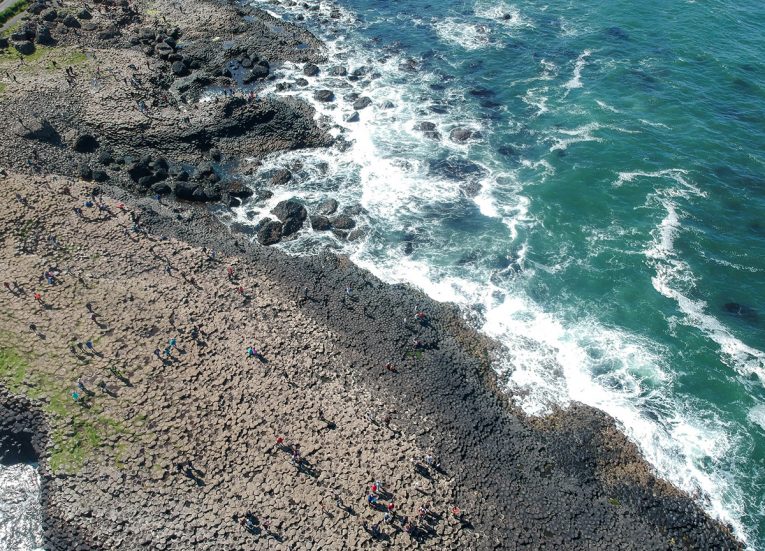
The Giant’s Causeway: More Than a Landmark
The Giant’s Causeway is often treated as a box to tick. That’s a mistake.
Arrive early or late, when the crowds thin out, and the experience changes completely. The basalt columns stop being a spectacle and start feeling like part of the coastline’s logic – something that belongs there rather than something to photograph.
“Natural formations don’t need explanation to feel significant. They just need time.”
Nearby, small cafés and pubs serve simple food done well : seafood chowder, fresh bread, nothing overcomplicated. It fits the setting.
Bushmills: Where Food and History Overlap
Bushmills is known for its distillery, but reducing it to whiskey misses the point. The town has a lived-in feel, shaped by both tourism and routine life.
The food scene reflects that balance. You’ll find places that cater to visitors, but also spots that clearly exist for locals first.
That distinction matters. It’s usually where the better meals are.
A short stop here can easily turn into a longer one, especially if you let yourself wander instead of sticking to a plan.
Dunluce Castle: A View That Doesn’t Compete
Dunluce Castle sits on the edge of a cliff in a way that feels slightly improbable. It’s dramatic, but not in a curated sense. There’s no attempt to soften it.
The structure doesn’t dominate the landscape, it’s part of it.
This is one of those places where you don’t need much time. Ten minutes can be enough. The impact is immediate.
And then you move on, carrying that image with you.
Portrush and Portstewart: Where the Trip Slows Down Again
Portrush and Portstewart bring a different kind of energy. More open, more social, slightly busier but still grounded.
These are places where the road trip pauses rather than pushes forward.
Seafront restaurants, long walks along the promenade, ice cream stops that turn into conversations. It’s not about finding the “best” spot , it’s about staying longer than you planned.
“Good road trips aren’t measured by distance. They’re measured by where you decide not to leave.”
Inland Detours: The Routes Most People Skip
While the coast gets most of the attention, the inland routes offer a different perspective. Rolling hills, quiet farms, roads that feel less travelled.
The scenery is softer, but not less interesting.
These detours work best when they’re unplanned. A turn taken out of curiosity. A stop that wasn’t marked on the map.
That’s often where the trip becomes personal rather than predefined.
Food as a Marker of Place
In Northern Ireland, food isn’t separated from location – it reflects it.
Seafood tastes different when eaten within sight of the water it came from. Bread feels more substantial when it’s part of a slower meal. Even simple dishes carry context.
You don’t need a list of “top restaurants.” You need awareness.
Look for places that feel used, not staged. Where menus aren’t trying too hard. Where people seem to return, not just pass through.
What Actually Makes the Trip Work
A successful road trip here doesn’t rely on perfect planning. It relies on leaving space.
Space to stop unexpectedly. Space to stay longer. Space to change direction without feeling like you’re losing time.
The structure matters but only up to a point.
After that, it’s about attention.
“Scenic routes don’t reveal themselves all at once. They reward those who slow down enough to notice.”
Final Thought
Northern Ireland isn’t a place you rush through, even if the map suggests you could. The roads are short, but the experience expands if you let it.
Drive with intention, but not rigidity. Stop often, but not for the sake of stopping.
And accept that the best parts of the trip won’t always be the ones you planned.