Contents
When people think of Provence, they think vineyards, stone villages, and lavender fields. The clichés. They don’t really think Mediterranean beach resorts, historic cities like Avignon, the glamour of Cannes, and France’s second-largest city, Marseille. In reality, it’s both a massive and truly diverse chunk of France, and I’ve not even yet got to the Camargue…
The Camargue is where Provence gets properly wild. A huge Rhône delta of wetlands, rice fields, salt lakes, sandy vineyards and Mediterranean beaches, famous for its pink flamingos, white horses and black bulls. It is a landscape that seems to change every few miles, from bird-filled marshes and open lagoons to medieval towns, vineyards and endless stretches of coast.
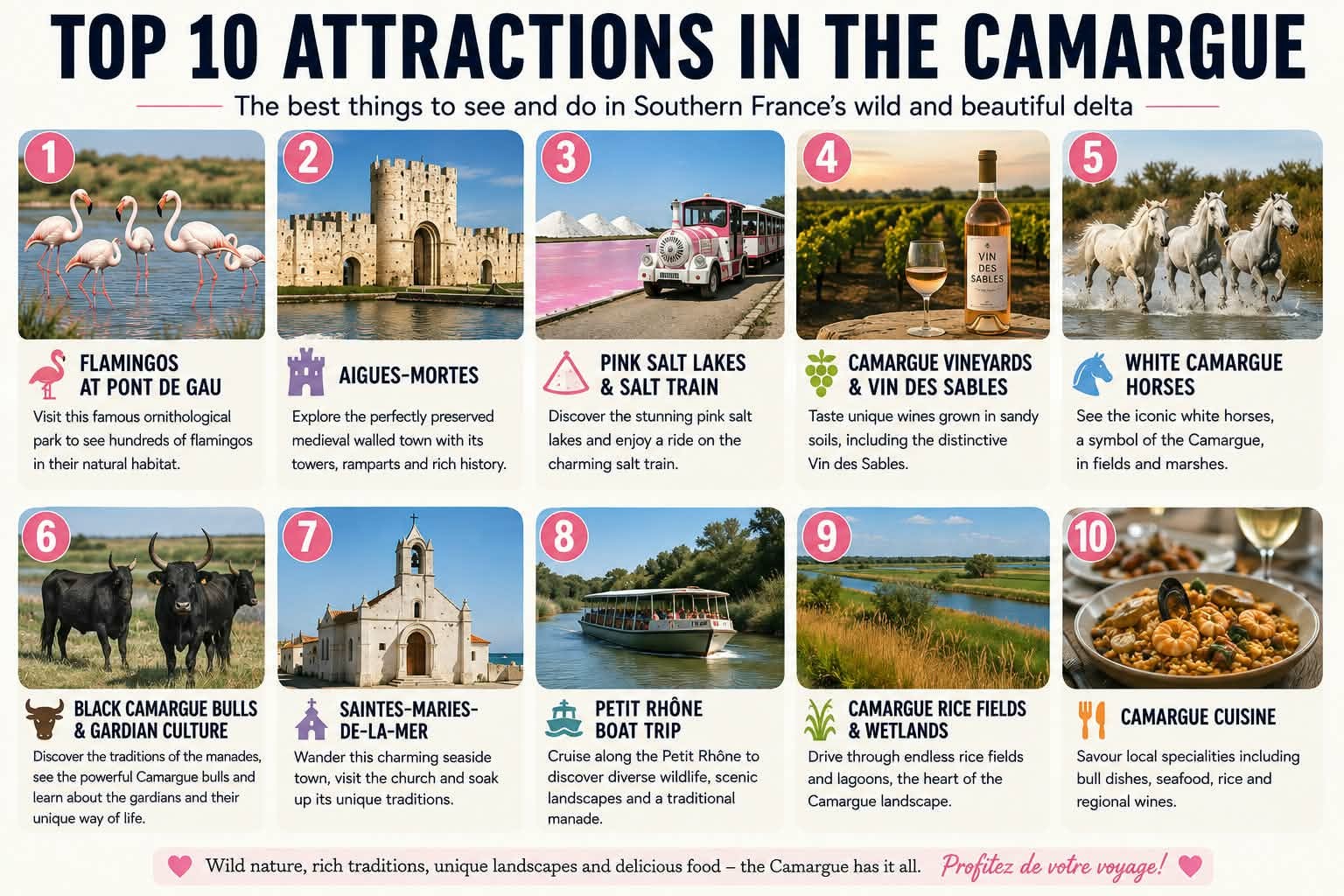
Here we share our Top 10 attractions in the Camargue, bringing together the places, wildlife, landscapes, food and local culture that stood out most from our travels through the region.
Where to Stay in the Camargue
Travelling as an extended family for the first time, we had a slightly different set of priorities than usual. Beansie was only six months old, while my parents were both fairly immobile, so we wanted somewhere easy, practical and close to everything.
With beaches on the doorstep for Fanfan’s picnics and the convenience of a proper town nearby, Saintes-Maries-de-la-Mer made the most sense as a base.
There was also a bit of nostalgia involved. Growing up, the traditional Wilson family holiday was camping in France, usually in the Vendée, so there was something quite nice about introducing Fanfan and Beansie to a very similar style of trip. And, just as importantly, we wanted somewhere with a swimming pool for Beansie.
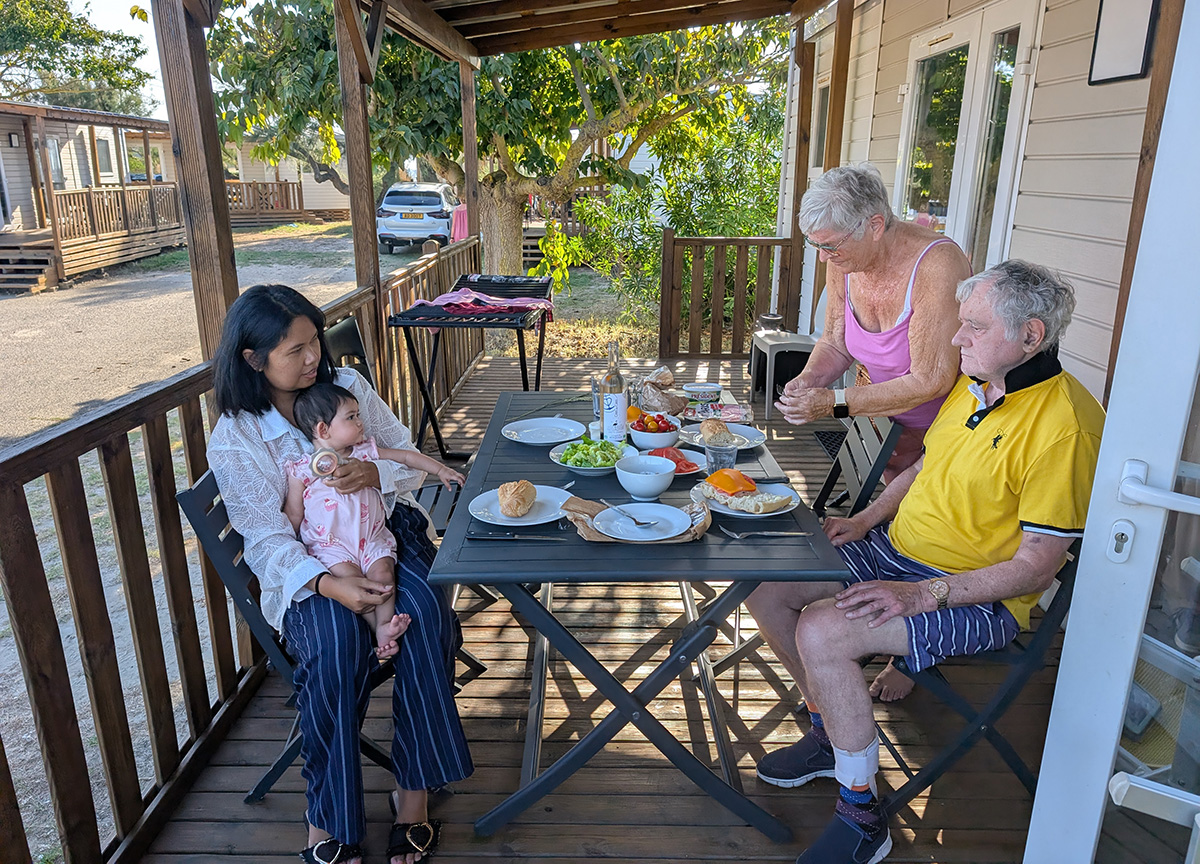
For our stay in the Camargue, we chose Camping Le Clos du Rhône, just outside Saintes-Maries-de-la-Mer and right beside the beach, staying in one of their three-bedroom cabins. It gave us the easy family setup we wanted while still keeping us close enough to town for restaurants, supermarkets and everything else we needed.
With different wake-up times, thin walls and a teething baby, we occasionally escaped to hotels as well. That included a night in Saintes-Maries-de-la-Mer itself, another in Aigues-Mortes, and a completely random side quest to Marseille for a couple of nights.
In hindsight, that mix worked well. The campsite gave us the space and flexibility we needed as a family, while the hotel stays gave everyone the occasional break and let us experience a few different corners of the region.

1. Flamingos at Pont de Gau Ornithology Park
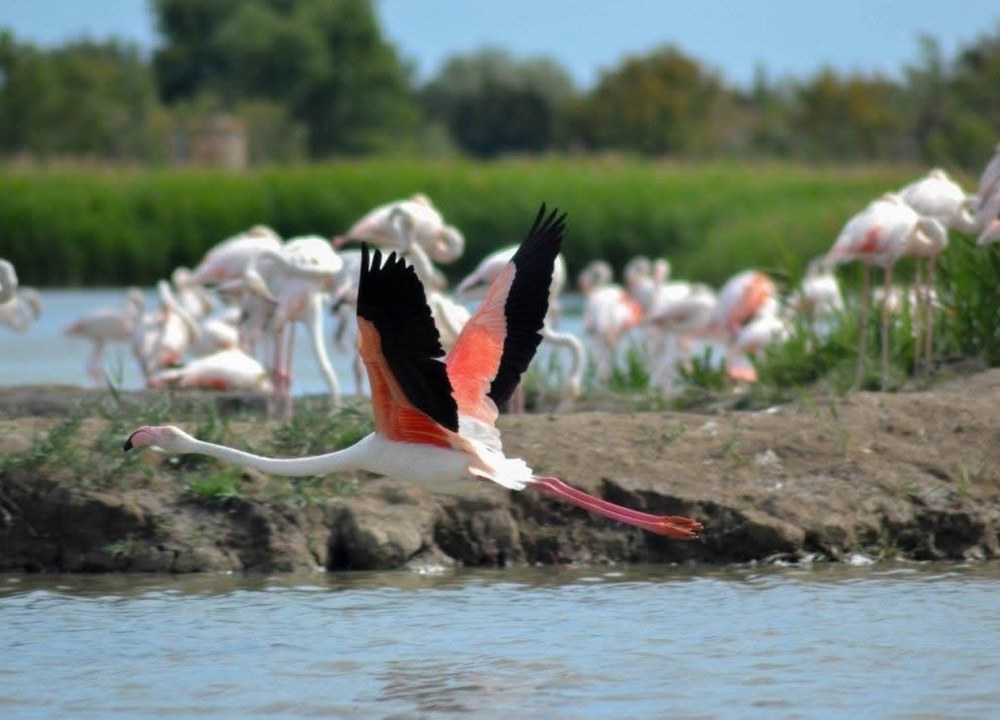
The flamingos were what first brought me to the Camargue more than 10 years ago on our road trip through southern France. Until then, I had absolutely no idea that pink flamingos even existed in this part of Europe.
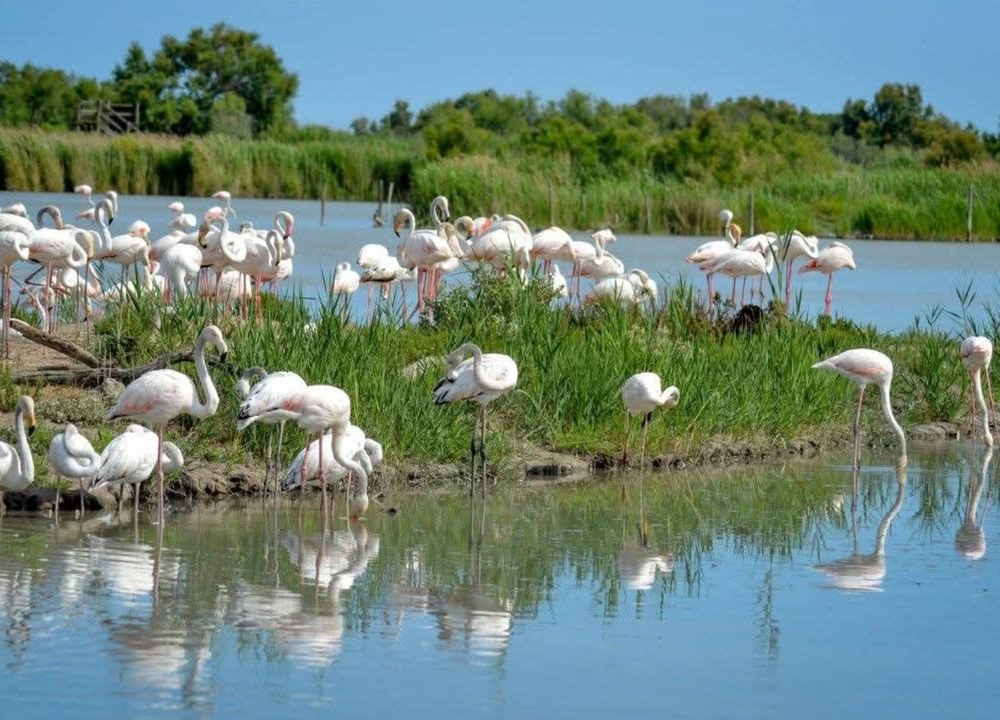
The main place to find them (and our first port of call 10 years ago) was the Parc Ornithologique de Pont de Gau just outside Saintes-Maries-de-la-Mer. A 60-hectare expanse of wetlands, ponds, reed beds and salt marshes, with walking trails and observation points running through the natural habitats. Hundreds of flamingos can gather here alongside herons, egrets and other wetland birds.
The important thing is that the birds are completely free-roaming — this isn’t a zoo or safari park — but the walking trails and various observation points still let you get remarkably close to them in their natural environment. We also spotted plenty of other wetland wildlife around the trails, including what I think was a friendly little coypu (nutria).
While Pont de Gau is the most reliable place to see large numbers of flamingos, they are not confined to the park, and they move freely throughout the wetlands of the Camargue and across the wider Mediterranean region. We’ve even spotted them farther east near Marseille. Otherwise the Camargue is the best place to find them, and Pont de Gau simply gives you the best chance of seeing hundreds together and getting remarkably close to them.


2. Saintes-Maries-de-la-Mer: The Seaside Capital
Saintes-Maries-de-la-Mer would be my recommended base for exploring the Camargue. We stayed nearby at Camping Le Clos du Rhône and ended up in town pretty much daily for supermarket supplies (Spar and Intermarché) and eating our way through the restaurants along the beachfront road and central streets.
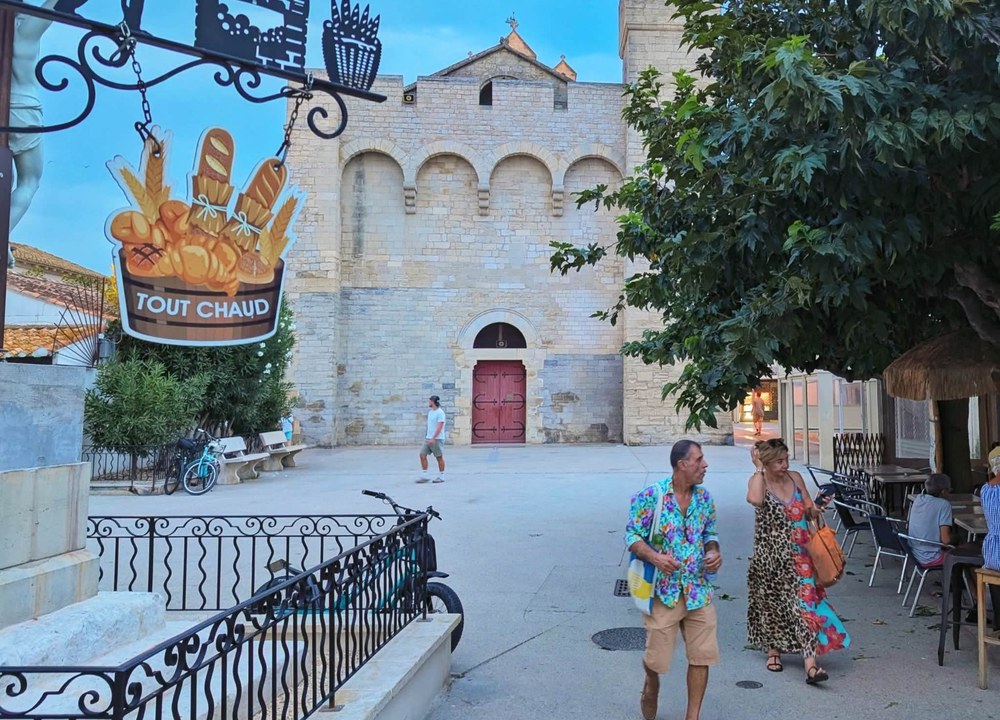
The town itself sits neatly between the Mediterranean and the wetlands of the Camargue, with its fortified church towering above the rooftops and visible from miles across the flat surrounding landscape. The historic centre gathers around the church with narrow streets, cafés, restaurants and plenty of souvenir shops selling the familiar products and symbols of the Camargue. Expect lots of bulls, horses and flamingos.
On Monday and Friday mornings, a Provençal market fills the Place des Gitans with local food and regional products, while the Arènes des Saintes-Maries-de-la-Mer hosts events celebrating the Camargue’s traditional bullfighting and gardian culture. Beaches stretch away in both directions, while the Digue à la Mer continues east into the wilder landscapes of the Camargue.
For me, Saintes-Maries-de-la-Mer works because it combines beach, restaurants, shops and Camargue traditions with easy access to the surrounding wetlands.
3. Aigues-Mortes: The Walled City
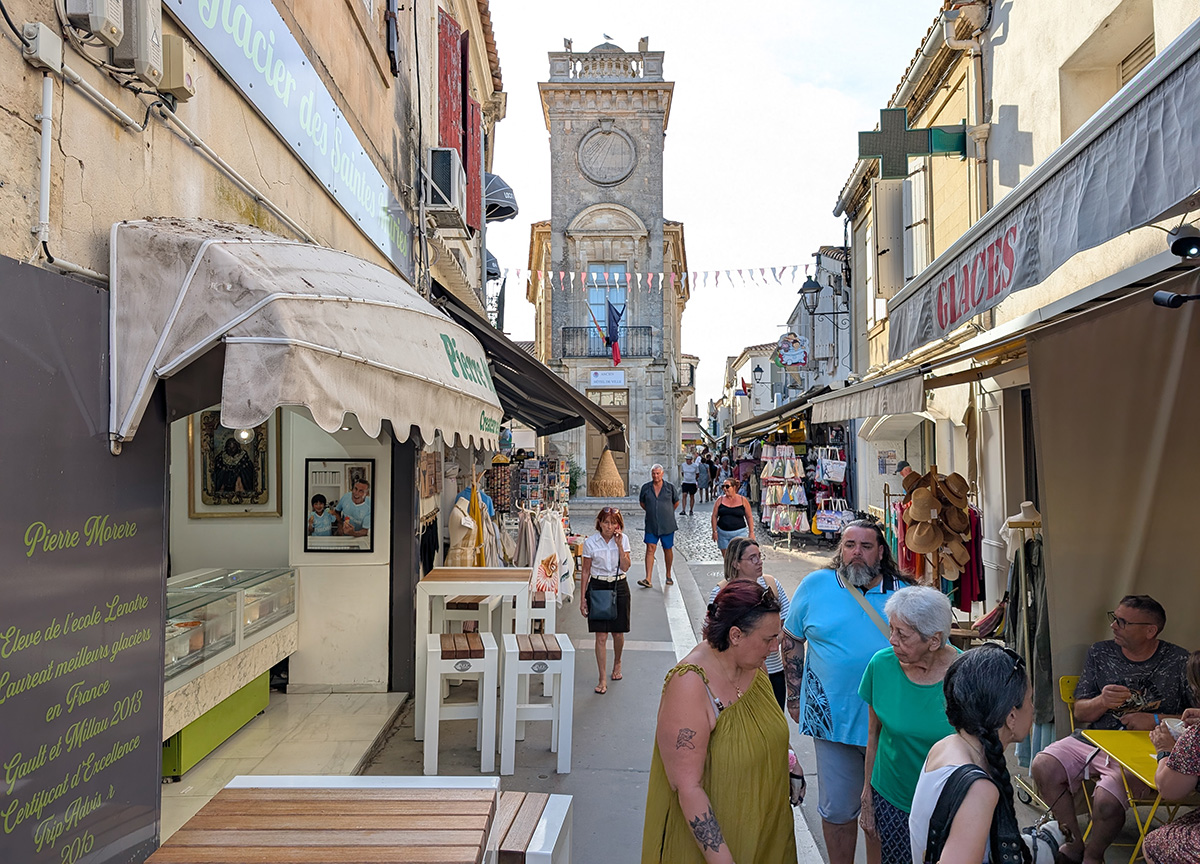
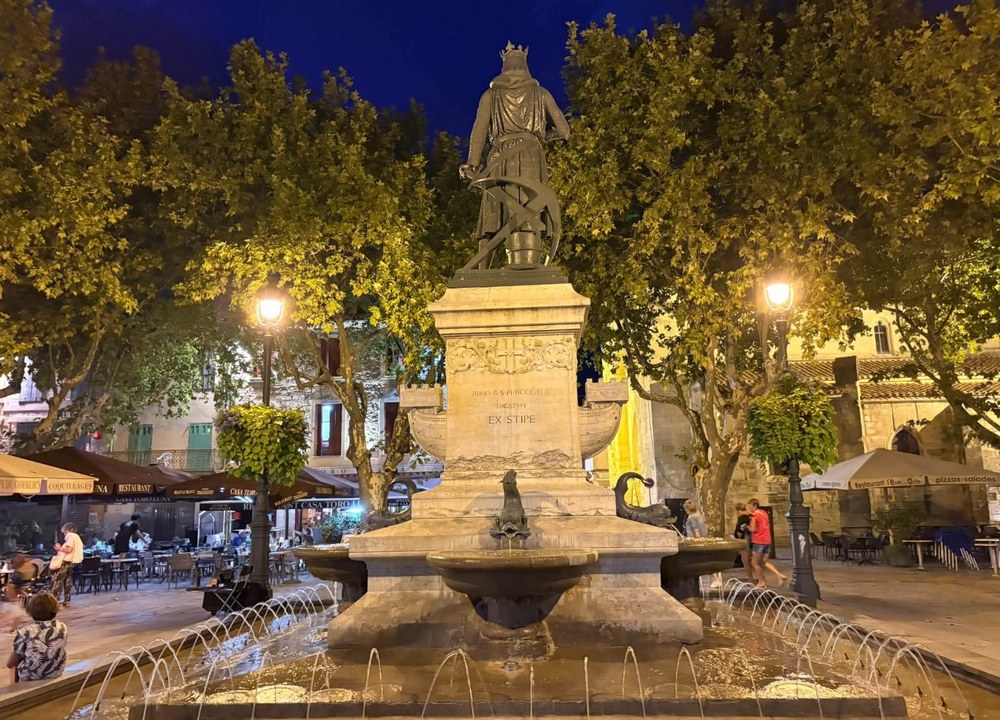
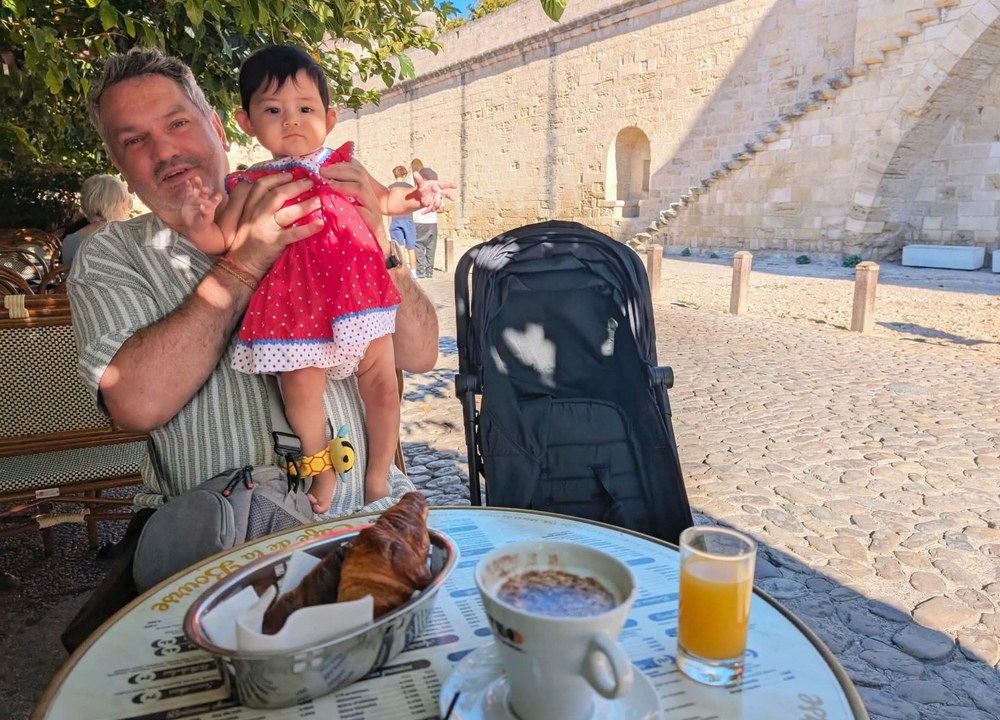
Aigues-Mortes feels completely different to Saintes-Maries-de-la-Mer. We first stopped for nibbles around the main square after visiting the nearby salt lakes, liked the atmosphere, and decided to return for the evening. We booked Maison Arthur in the historic centre so we could stay after the daytime crowds had thinned out.
The main attraction is the medieval fortifications. Around 1.6km of remarkably well-preserved walls still encircle the old town, along with gateways, towers and the imposing Tour de Constance.
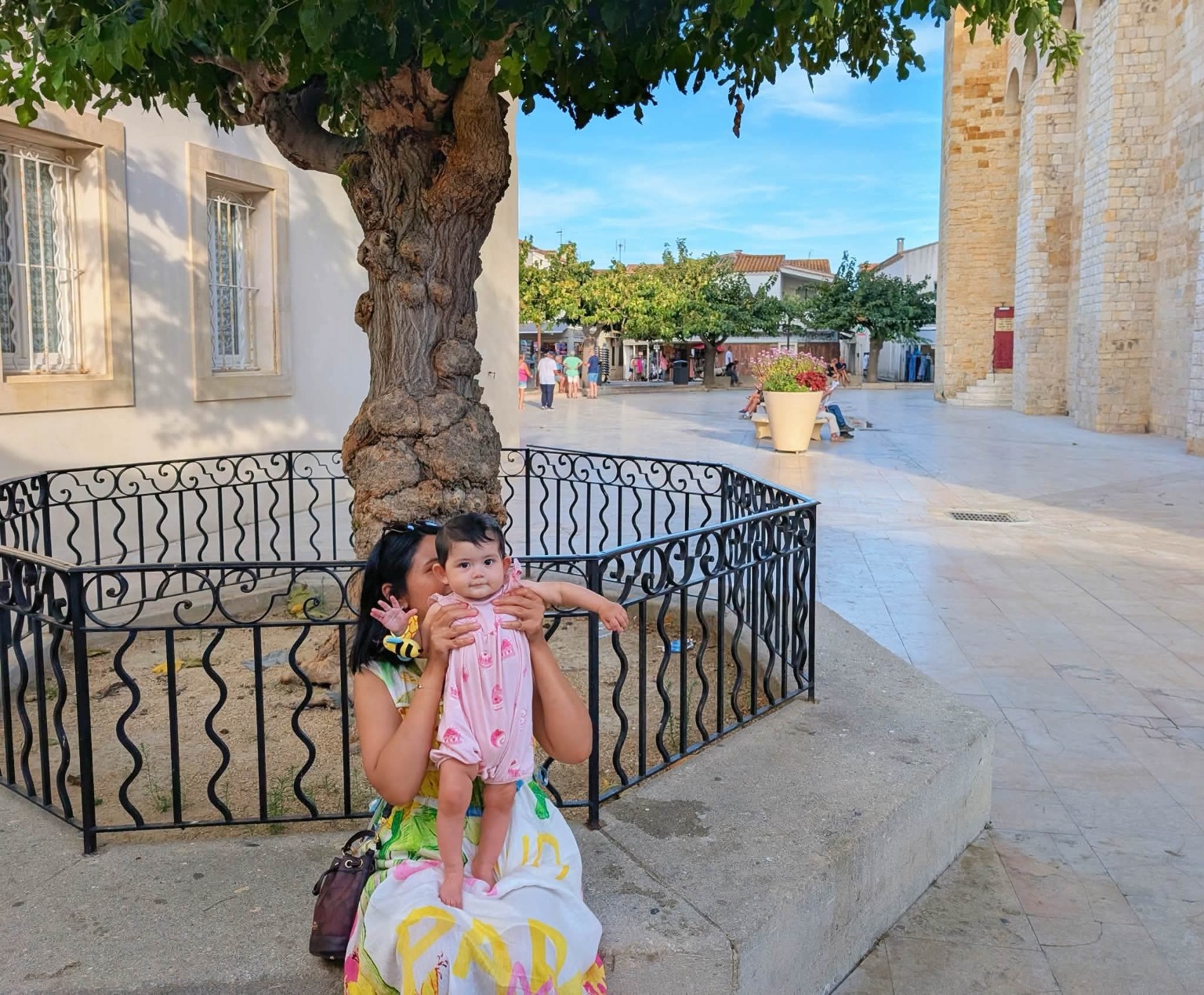
We skipped the rampart walk because it is a paid attraction and, with Beansie in the pram, we knew we wouldn’t make the most of it. Instead we wandered the compact streets, stopped around the central squares and enjoyed the town at a slower pace.
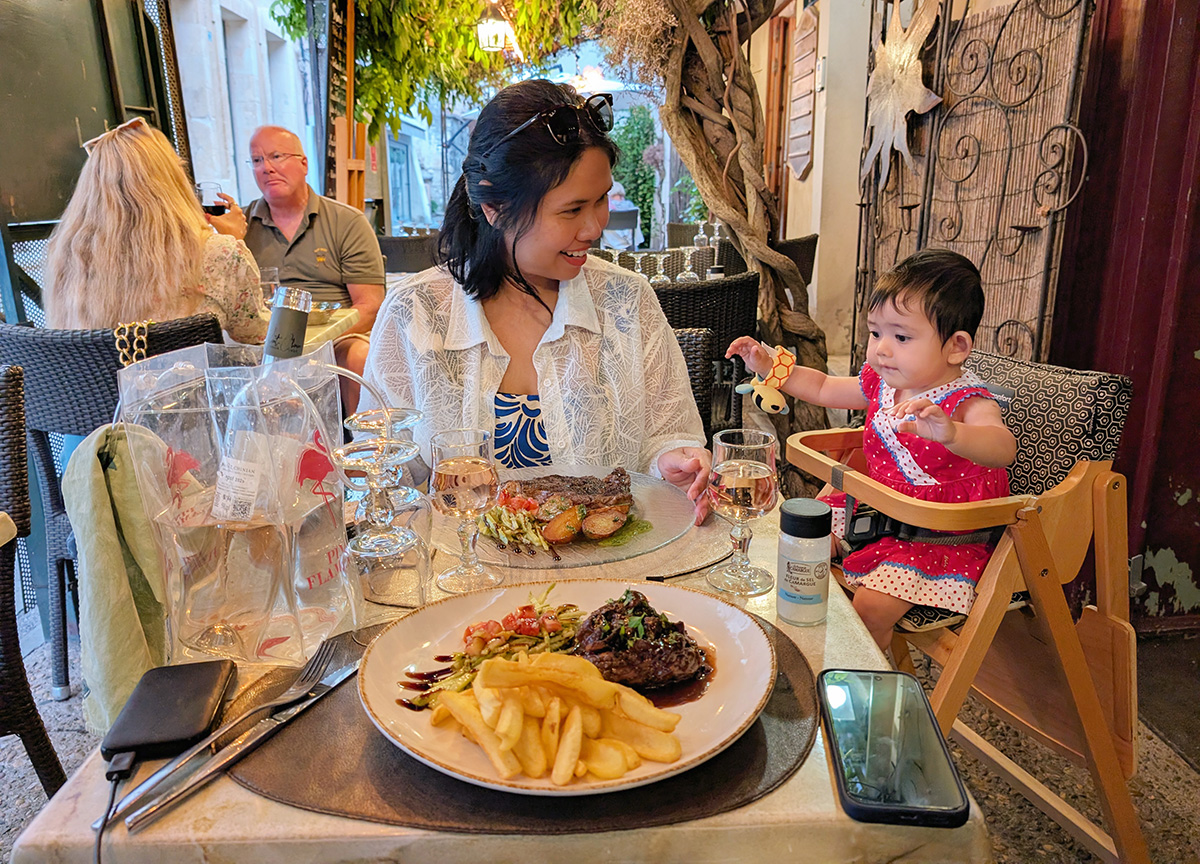
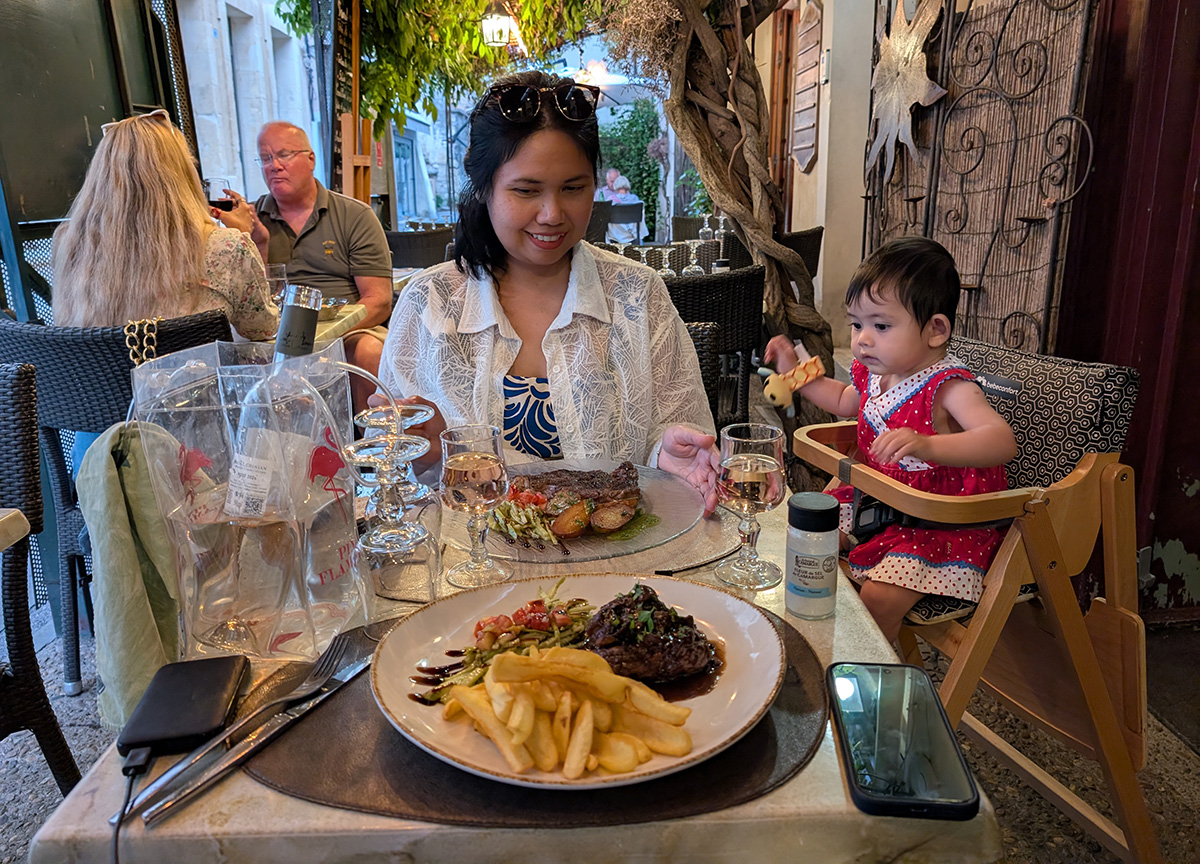
That evening we ate local bull steak — one of the more distinctive foods of the Camargue — at L’Atelier BL before wine and cocktails around the fountain area of the central square.
The saltworks and pink lakes sit right beside Aigues-Mortes, but they deserve their own stop on this list.
4. Pink Salt Lakes at Salins d’Aigues-Mortes
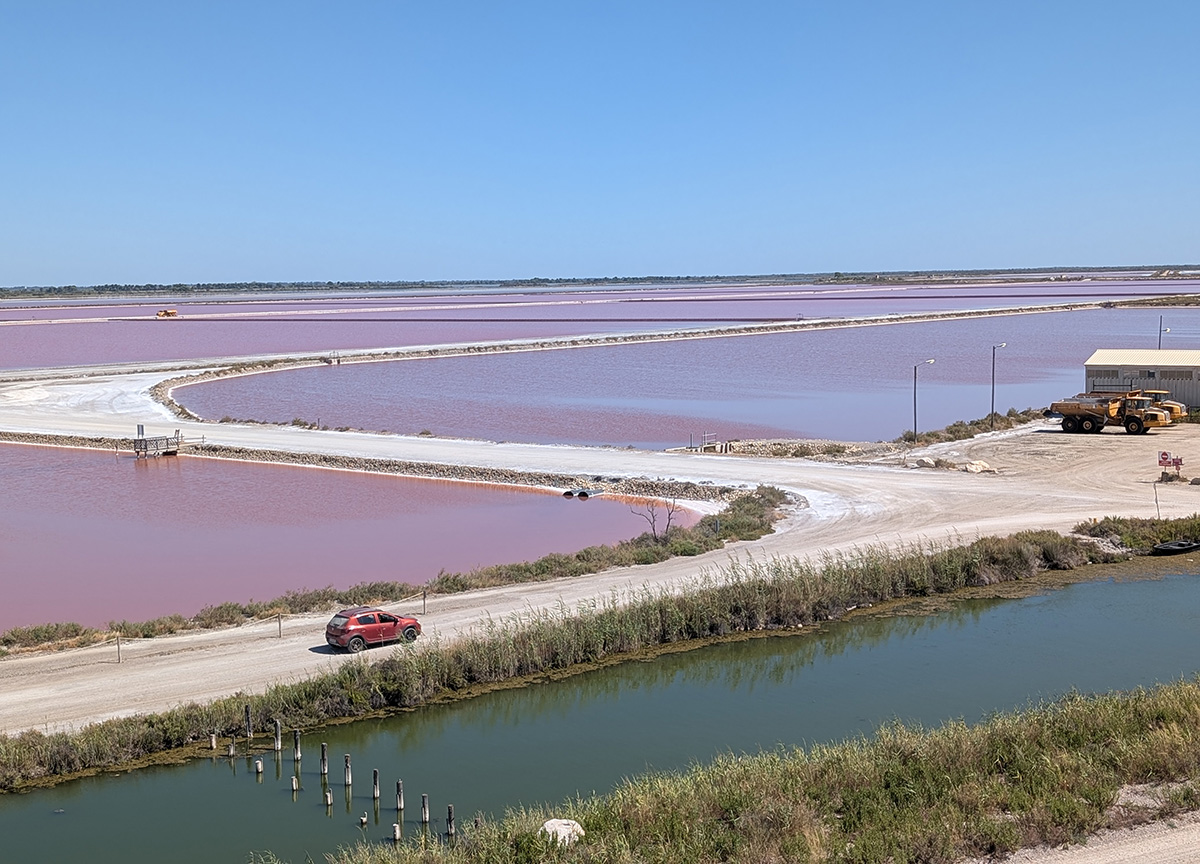
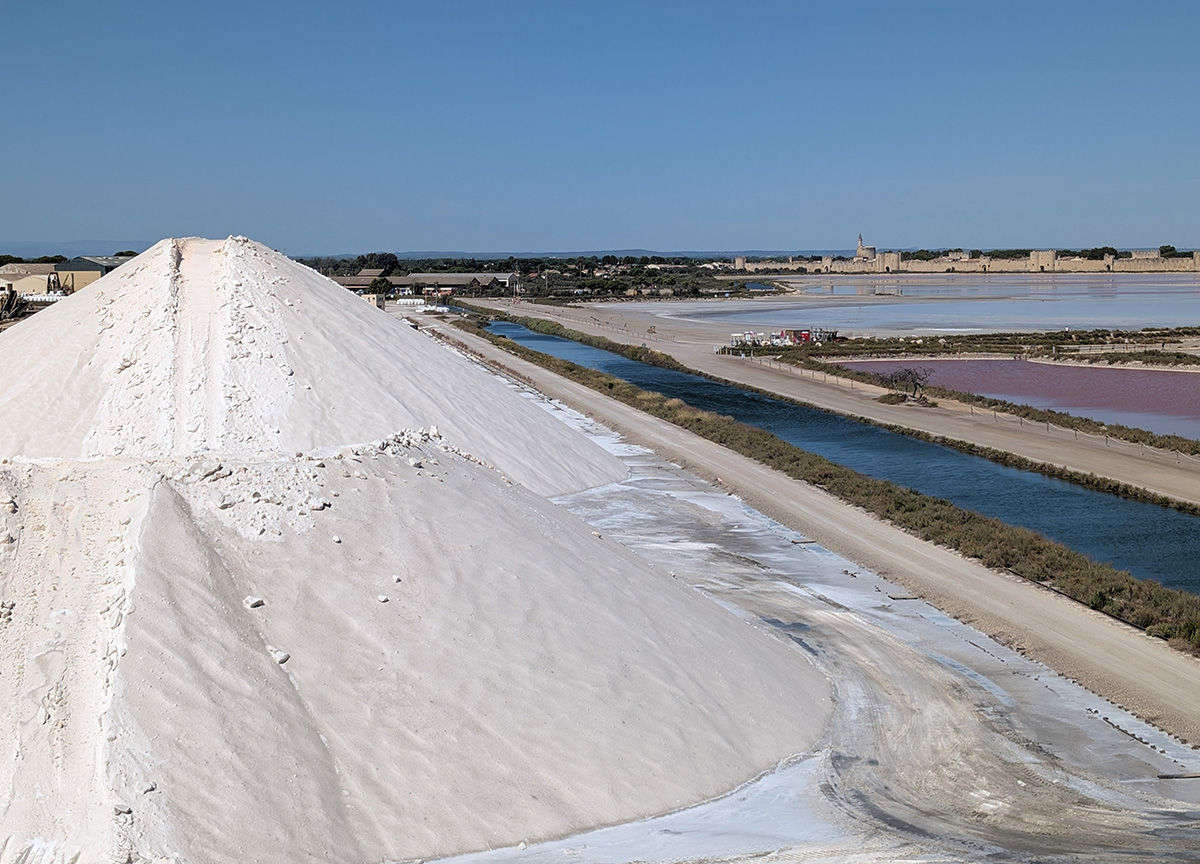
Just outside Aigues-Mortes are the Salins d’Aigues-Mortes — literally the saltworks of Aigues-Mortes — one of the most distinctive landscapes in the Camargue. The huge saltworks stretch across shallow ponds and salt basins, many taking on shades of pink depending on the light, season and concentration of salt. We visited in early September, so the colours were not quite as vivid as they can be earlier in summer.
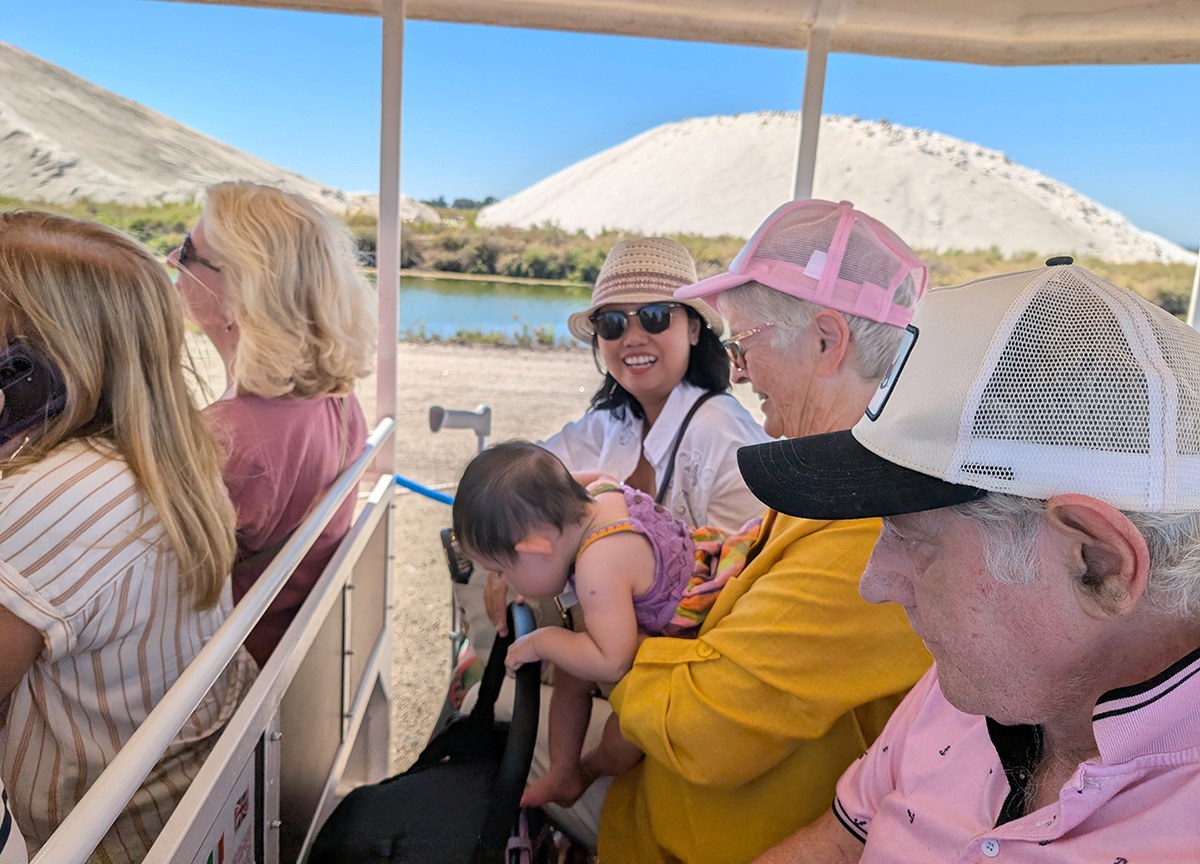
The easiest way to see them is on the Petit Train, which travels through the salt pans for just over an hour with stops along the way. The commentary and information are in French, explaining how Sel de Camargue is produced while passing the pink waters, salt mounds and surrounding wetlands.
There is also a stop where you can climb one of the large salt hills for panoramic views back towards Aigues-Mortes. We managed it with Beansie in the buggy, so it is not particularly strenuous.
At the furthest point there is a small museum and souvenir shop before the train loops back towards the start.
5. Camargue Wine & Vineyards
One of my main regrets from the Camargue was not making time for a proper vineyard tour. We had planned to visit Domaine Royal de Jarras, which offers tours through its vineyards followed by wine tasting, but by the end of the trip we had simply run out of time. Travelling with Beansie also meant our days were never quite as predictable as they once were, so this is one I would definitely book in advance next time.
I did at least manage to explore some of the vineyards on foot — although trespassing would probably be the more accurate term — including around the famous Montcalm area.
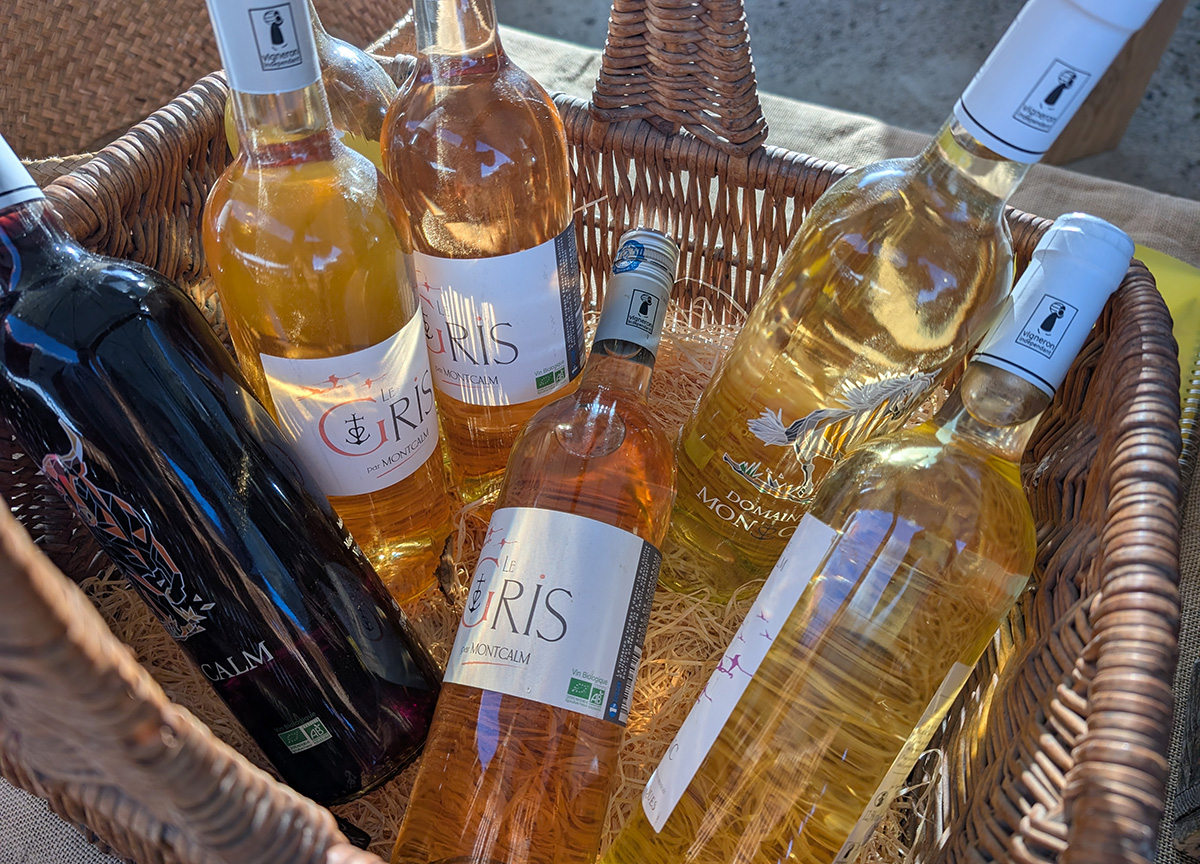
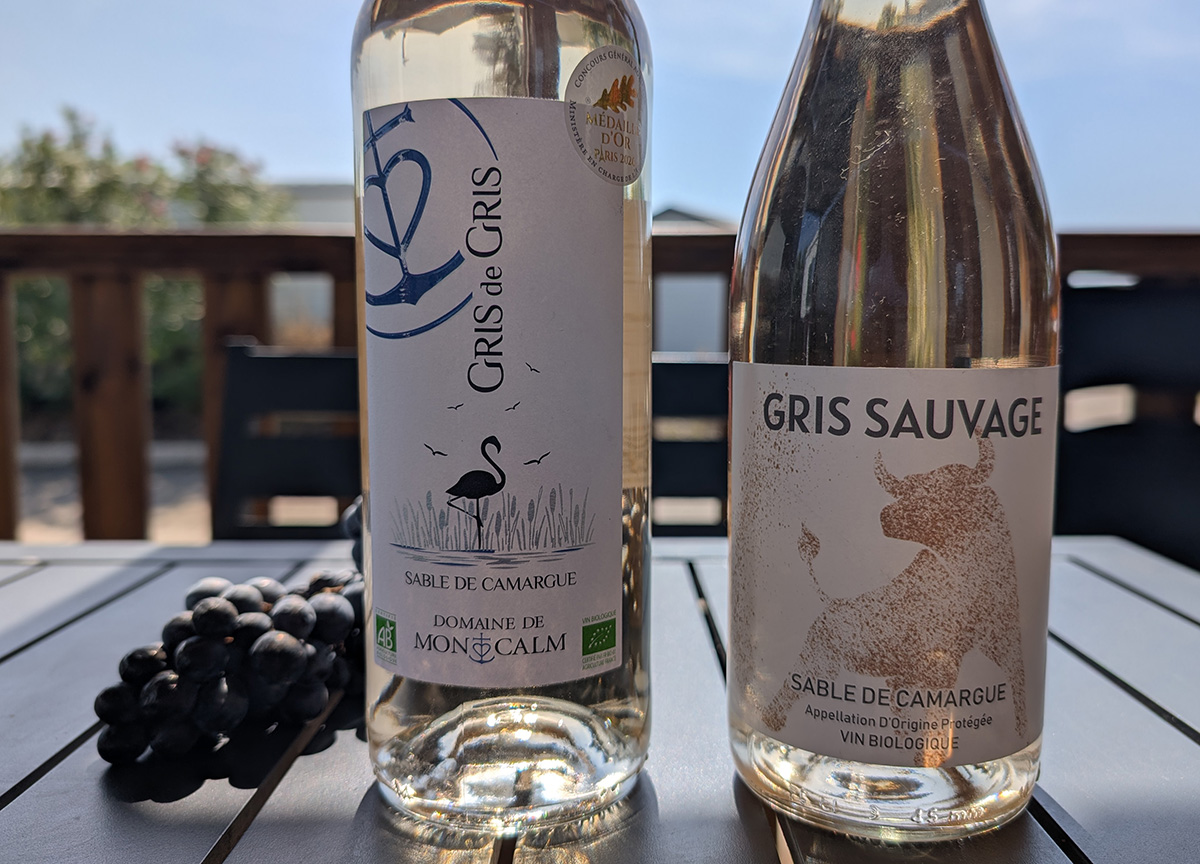
Wine in the Camargue is unusual because many of the vines grow in the sandy soils between the wetlands and Mediterranean coast. The region is particularly known for Vin des Sables — literally “wine of the sands” — including the pale Gris de Gris rosé that you will see throughout the Camargue.
Domaine Royal de Jarras also offers tours by small train through the estate, with some visits combining the vineyards with the Camargue’s traditional manade, bulls and gardians.
It remains on our to-do list for next time.

6. Wild Camargue Horses
The white horses of the Camargue are every bit as iconic as the flamingos. They are closely tied to the region’s gardians, the traditional horseback cattle herders, so the horses, bulls and gardian culture naturally overlap — but the horses deserve their own stop on the list.
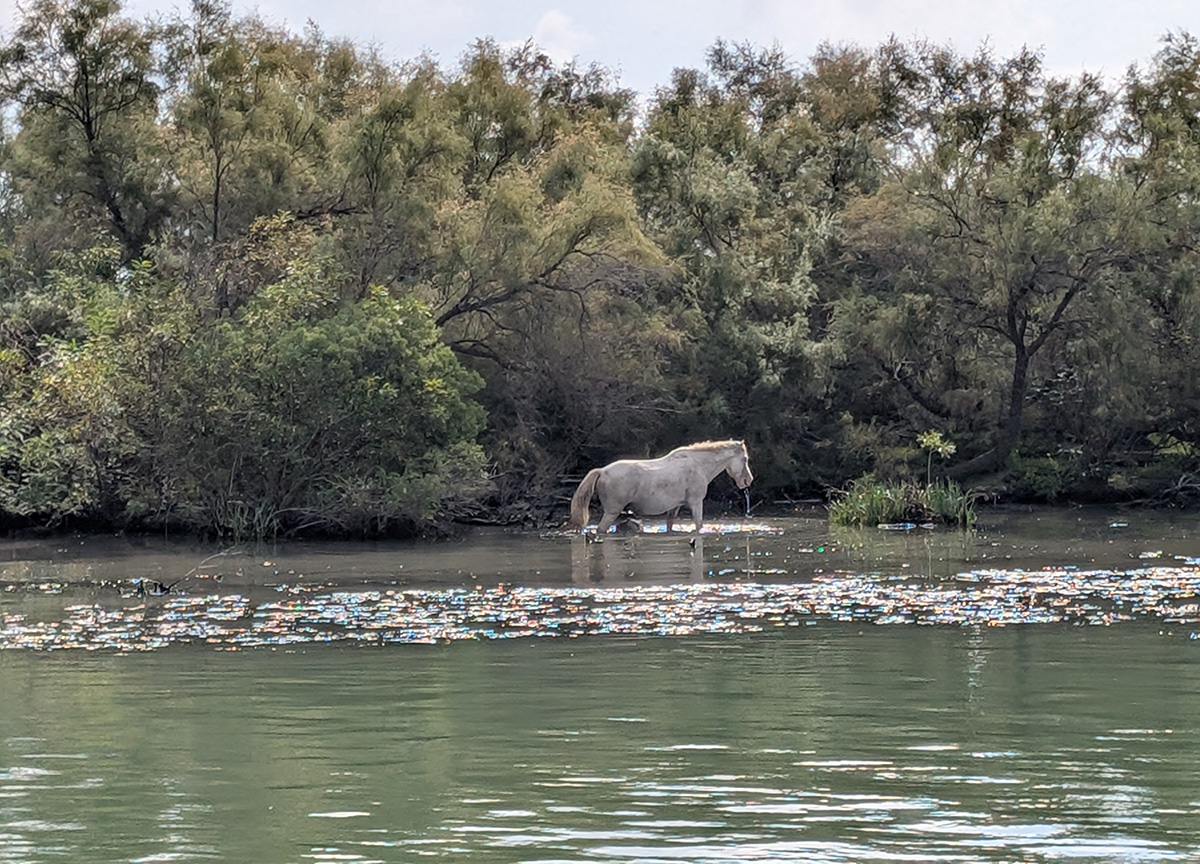
Camargue horses are a small, hardy local breed adapted to the wetlands of the Rhône delta. Their pale coats stand out against the reeds, lagoons and flat landscapes, and seeing them out in the open was one of the most memorable parts of my first visit to the Camargue (the first photo below is from this time). Some are managed within local herds and manades, while others appear remarkably wild as they graze across the wetlands.
Horse riding is also one of the easiest ways to experience the landscape. Around Saintes-Maries-de-la-Mer there are numerous stables offering rides through the marshes, beaches and gardian country.
Right beside Camping Le Clos du Rhône was Lou Simbèu, offering rides through the surrounding marshes and towards the beach. We did at least call in long enough for Beansie to get licked by one of the ponies, although a proper ride remains on the list for next time.


7. Wild Bulls and Gardian Culture
My first proper introduction to Camargue culture came while eating Gardiane de Taureau (Camargue bull stew) along Avenue Van Gogh in Saintes-Maries-de-la-Mer. I had no idea at the time that the nearby bullring had hosted a Course de Taù, a traditional competition involving young bulls and gardians.
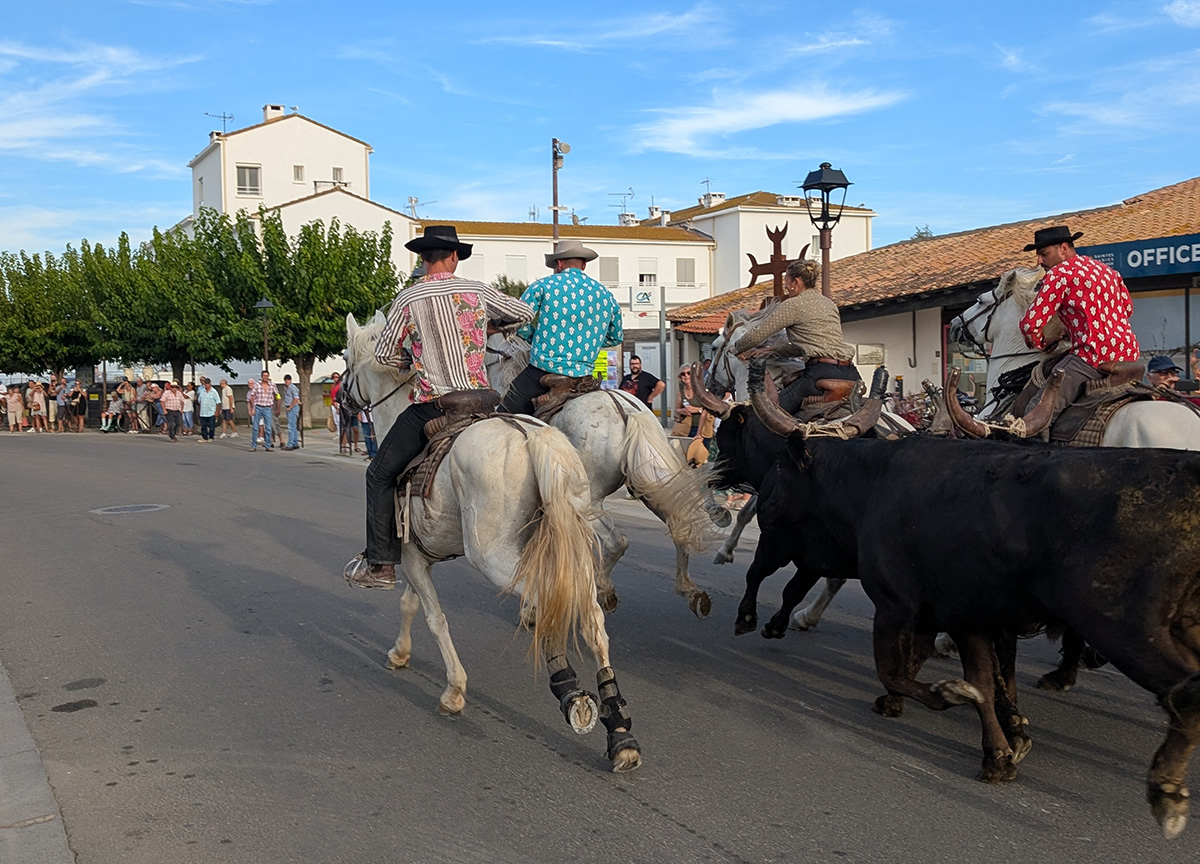
Suddenly there was a frenzy outside as gardians galloped past on their white Camargue horses, escorting black bulls through the streets from the arena. This is known as a bandido, part of the traditional bull culture that remains very much alive around Saintes-Maries-de-la-Mer.
Beyond the arena, Camargue bulls are traditionally raised outdoors in herds known as manades, managed across the wetlands by gardians on horseback. Many manades can be visited independently, with experiences ranging from guided tours and cattle-sorting demonstrations to horseback rides, local food and full Camargue meals. Some even offer traditional accommodation for a more immersive stay.
The manades also appear within other attractions and tours, including Domaine Royal de Jarras (the vineyard tour we missed) and our Petit Rhône boat trip, tying together the horses, bulls and gardians that define so much of the Camargue.

8. Petit Rhône Boat Trip
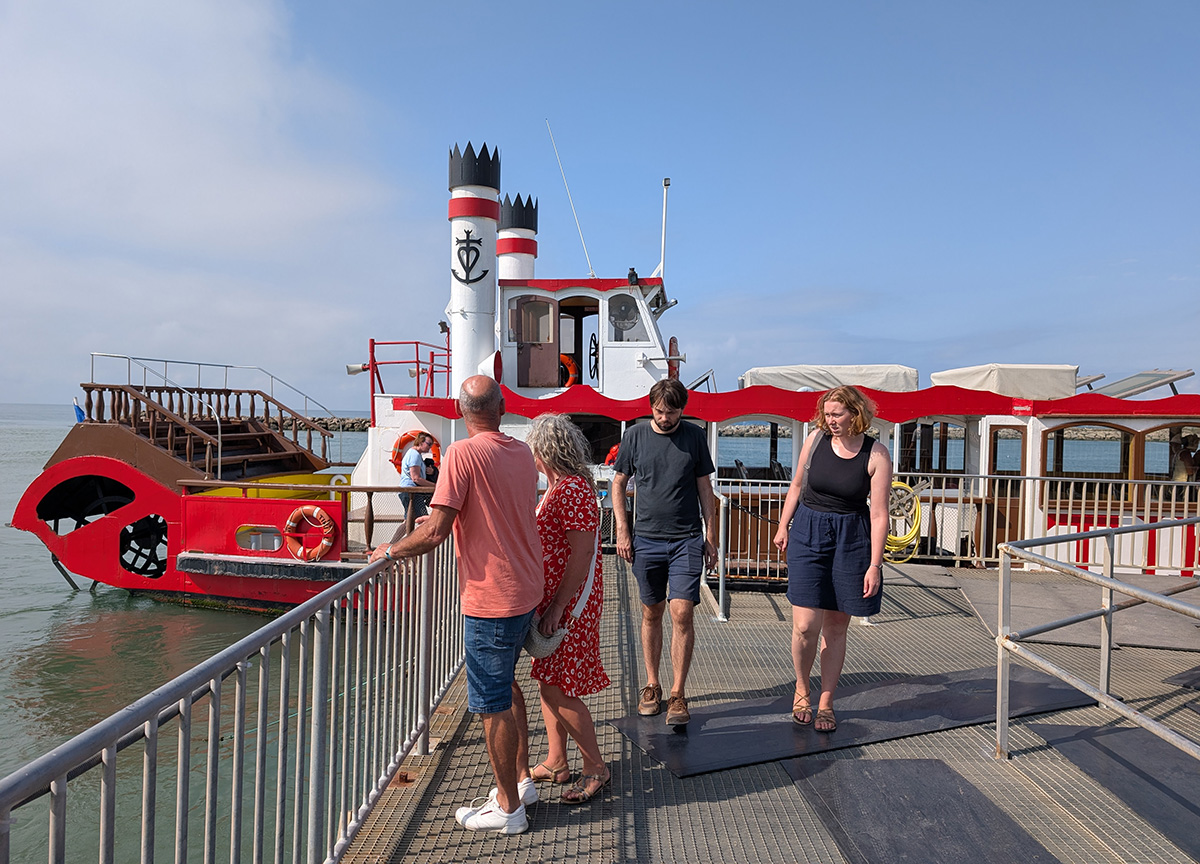
We passed random boat trips around Aigues-Mortes but were hoping to find something closer to Saintes-Maries-de-la-Mer. A bit of Googling eventually led us to the TIKI III, whose car park pretty much connects with Camping Le Clos du Rhône, making it an easy half-day outing with Beansie and my older parents.
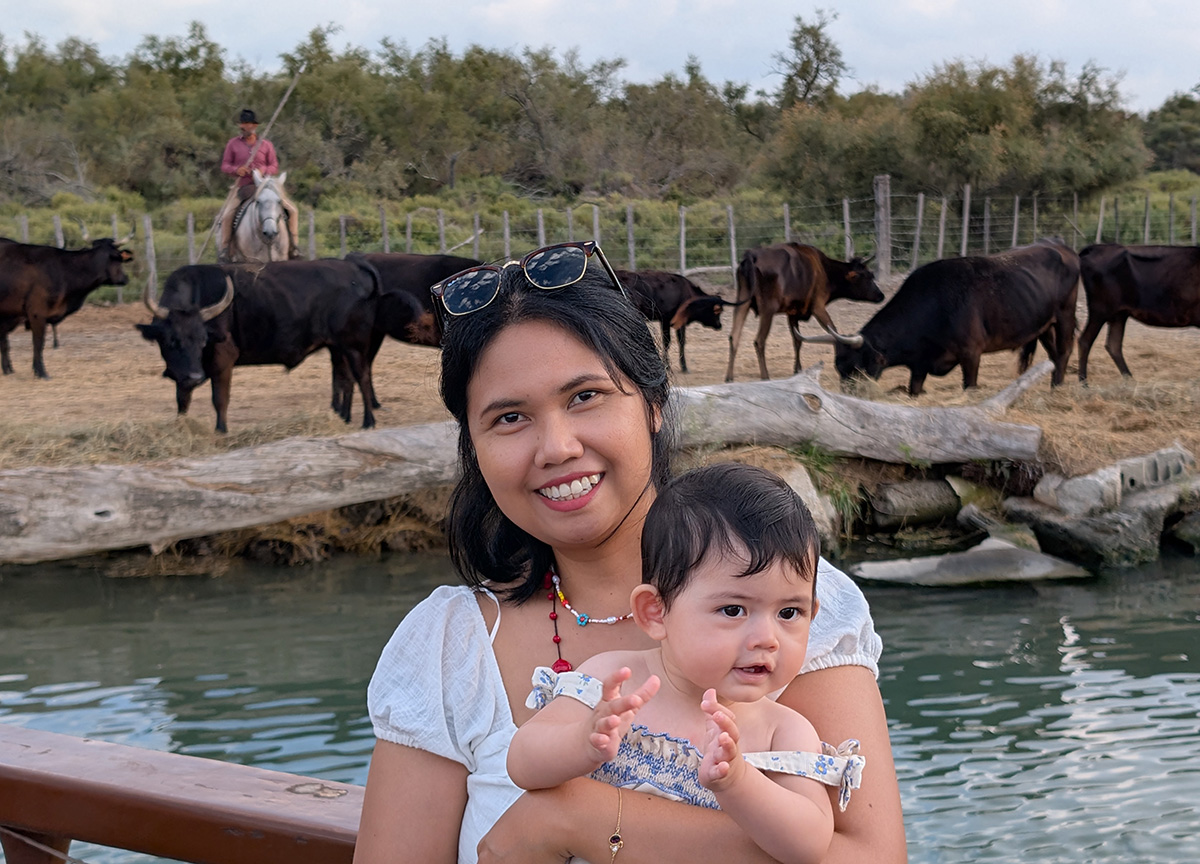
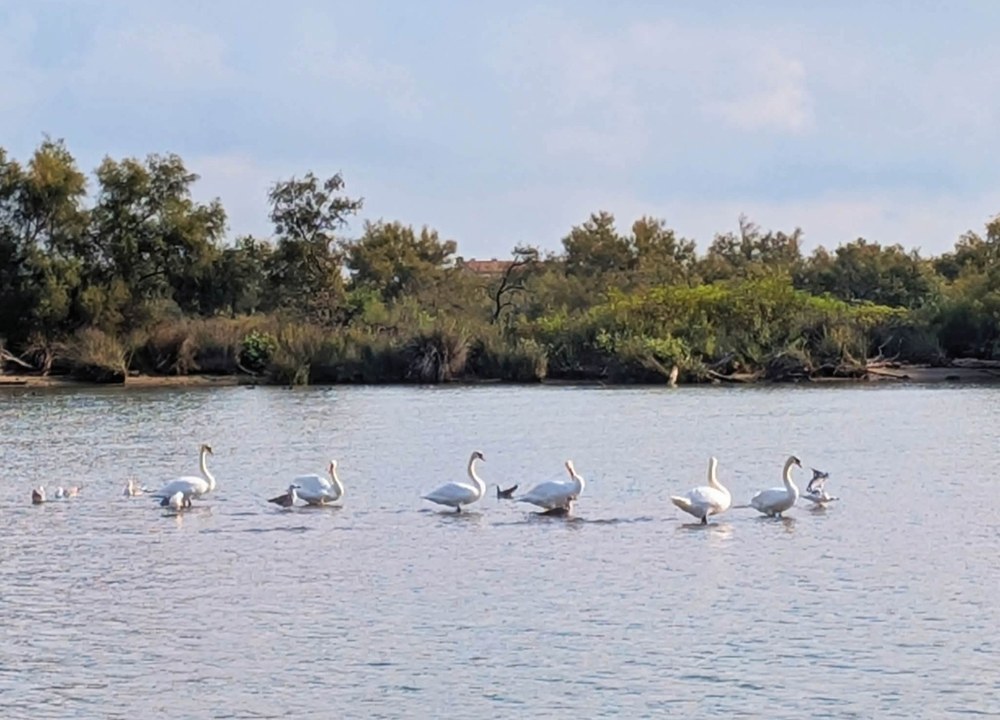
The trip follows the Petit Rhône river out through the Camargue before returning along the same route. I had hoped to see more flamingos, but they tend to favour the shallower wetlands rather than the river itself. There was still plenty of birdlife along the banks, along with the occasional bull, wild horses and classic Camargue scenery.
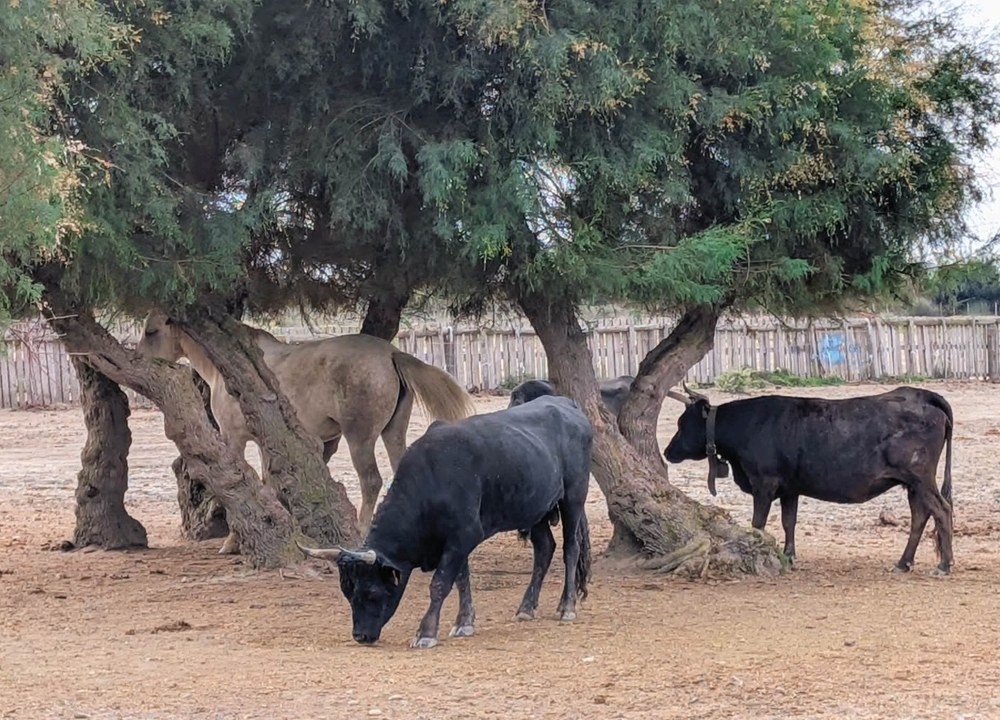
The highlight comes with the stop beside a manade, where black bulls, white horses and a gardian on horseback bring together several of the region’s most distinctive traditions in one place.
The commentary is in French, although English information cards are provided on board. It is all pretty much self-explanatory anyway, so it is still easy enough to follow the main points of the journey. Overall, it was a simple and relaxed way to see another side of the Camargue from the water.
9. Diverse Landscapes of the Camargue
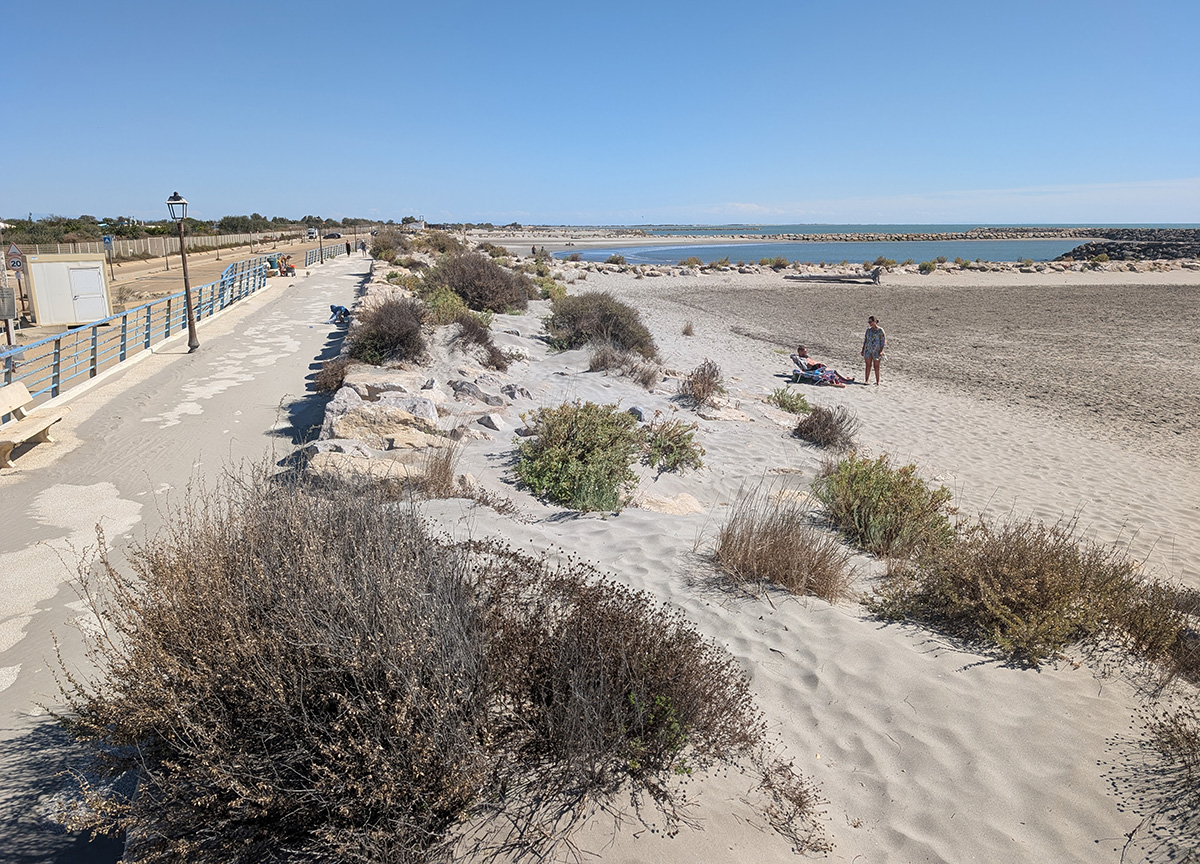
What surprised me most on my first road trip through the Camargue was the sheer diversity of the landscape. The flamingos and white horses were unexpected enough, but the region itself constantly changes between marshes, rice fields, vineyards, salt lakes, beaches and huge stretches of open wetland.
Even arriving on this visit was a reminder of how wild it still is — we passed two wild boars killed on the roadside before reaching Saintes-Maries-de-la-Mer.
Every other day or so I would drive towards Aigues-Mortes, partly for the larger supermarkets, but mostly because I loved the route. It cuts through rice fields and marshland, passes the vineyards around Montcalm, and then opens out again towards the salt lakes. On the way back I would often take the longer roads and get slightly lost through the flamingo-filled wetlands.
The coast adds another completely different landscape, with beaches stretching away from Saintes-Maries-de-la-Mer in both directions perfect for Fanfan and her obsession with picnics.
Driving is probably the easiest way to appreciate the variety, but the Camargue Regional Natural Park can also be explored by horseback, bicycle, 4×4 and guided nature tours through the wetlands and manades.

10. Local Camargue Food & Drink
Food in the Camargue feels unusually tied to the landscape, even by French standards. The region produces ingredients that are recognised far beyond southern France, including Camargue rice, sea salt from the vast salt pans around Aigues-Mortes, and wines from vineyards growing in the sandy soils between the wetlands and Mediterranean coast.
Many of the attractions on this list are therefore connected directly to what ends up on the plate. The salt lakes produce Sel de Camargue and fleur de sel, the rice fields supply the region’s famous rice, while the sandy vineyards produce Vin des Sables, including the pale Gris de Gris rosé.
The best-known local dish is Gardiane de Taureau, slow-cooked Camargue bull served with rice, but bull also appears as steaks, sausages, saucisson, terrines and pâtés. Around Saintes-Maries-de-la-Mer the markets and food shops are packed with these products, alongside Mediterranean seafood such as tellines, usually served simply with garlic and parsley, while local breweries even produce beer using Camargue rice.
For much more, see our guide to Traditional Food in the Camargue.